A spindle bed frame isn't merely a place to rest; it's a sculpture of wood that bridges the gap between 17th-century heritage and 21st-century luxury. You've likely felt the frustration of browsing mass-market showrooms only to find thin veneers and shaky joinery that lacks a sense of soul. It's an exhausting search when you're looking for furniture that honors traditional craftsmanship while fitting into a modern, curated home. We understand that for the discerning eye, a bed should be an anchor of stability and a testament to the maker's hand.
In this guide, you'll discover the heritage and technical artistry of hand-turned wood to help you select an heirloom-quality centerpiece for your home. We'll explore the nuanced design principles that separate a masterwork from a fleeting trend, including the superior durability of solid wood. You'll gain the clarity needed to identify the perfect spindle style for your room, ensuring your investment reflects both quality and timeless elegance. From the rhythmic beauty of turned posts to the strength of traditional joinery, we'll help you transform your bedroom into a sophisticated retreat.
Key Takeaways
- Trace the evolution of the spindle bed frame from its 17th-century utilitarian roots to its status as a contemporary artisanal masterpiece.
- Identify the technical value of hand-turned hardwoods like Maple and Oak, which provide superior durability compared to mass-market alternatives.
- Compare the distinct silhouettes of classic spindle, bobbin, and barley twist profiles to select a design that resonates with your personal style.
- Master the art of styling by using the airy, vertical lines of a spindle bed to create a sense of space in any room.
- Recognize the lasting benefits of American-made, made-to-order furniture as an investment in both sustainability and heritage.
What is a Spindle Bed Frame? Heritage and Anatomy
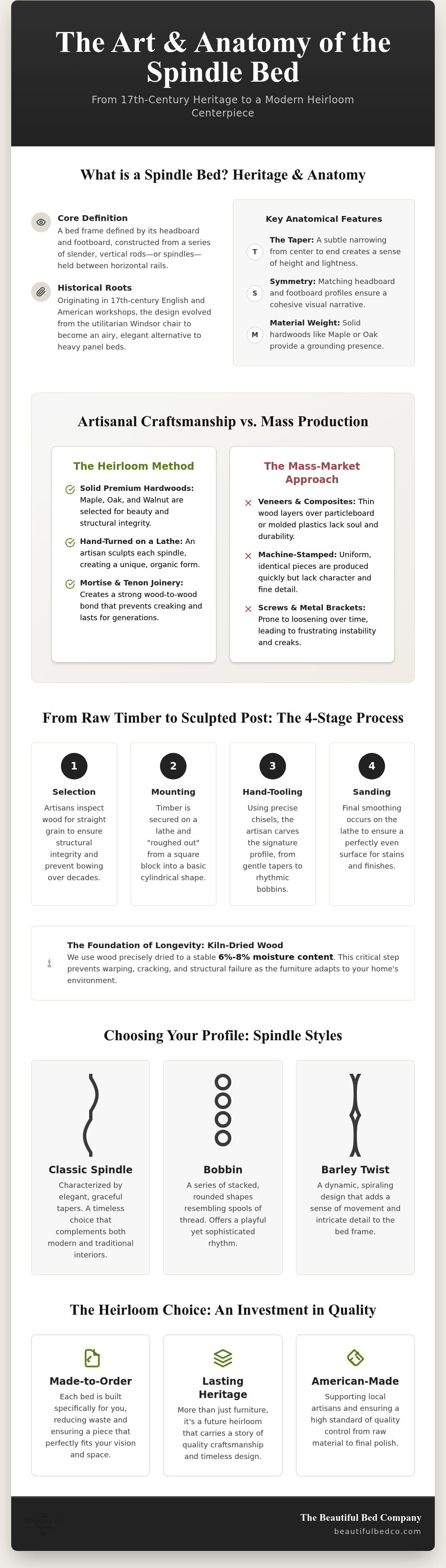
A spindle bed frame is defined by its series of slender, vertical rods, or spindles, that are secured between horizontal rails. These components aren't just decorative; they provide the essential structure of the headboard and footboard. Historically, the spindle has deep roots in 17th-century craftsmanship. What began as a utilitarian necessity in English and American workshops has evolved into a hallmark of refined interior design. The Spindle (furniture) design gained prominence with the Windsor chair and eventually moved to the bedroom, where its airy silhouette offered a lighter alternative to the heavy, solid-panel beds of the era.
The creation of these rhythmic shapes relies on the lathe. This specialized tool rotates a square piece of premium hardwood at high speeds, allowing an artisan to carve away material with precise chisels. It's this process that produces the iconic tapers and graceful curves. Because each piece is turned individually, the wood retains a sense of movement and life that machine-stamped alternatives can't replicate. This dedication to the "turn" is why the style remains a staple in high-end furniture design today.
The Anatomy of a Handcrafted Spindle
A masterfully constructed spindle bed frame balances three key elements: diameter, taper, and spacing. If the spindles are too thin, the bed feels fragile; if they're too thick, the design loses its characteristic elegance. We focus on the relationship between these parts to create a sense of visual harmony. Key anatomical features include:
- The Taper: A subtle narrowing from the center to the ends creates a sense of height and lightness.
- Symmetry: Matching the headboard and footboard profiles ensures a cohesive visual narrative across the entire room.
- Material Weight: Using solid hardwoods like Maple or Oak provides a grounding presence that flimsy veneers simply lack.
Traditional Joinery vs. Modern Assembly
The longevity of a bed depends on how the components meet. Mass-market options often rely on metal brackets or simple screws that loosen over time. In contrast, authentic artisanal beds utilize mortise and tenon joinery. This technique involves carving a hole (the mortise) in the rail to perfectly receive the end of the spindle (the tenon). It creates a wood-to-wood bond that prevents the frustrating creaks often found in cheaper frames. Beyond the structure, the tactile experience is vastly different. Hand-sanding each spindle ensures a smooth, organic finish that feels warm to the touch, unlike the cold, plastic-like coating of machine-finished wood.
The Art of the Turn: How Spindle Beds Are Crafted
The soul of a spindle bed frame lies in the transformation of raw timber into a rhythmic, sculpted form. While mass-market furniture often relies on molded plastics or thin veneers, the artisanal approach begins with solid blocks of premium hardwoods. We select Maple for its smooth finish, Oak for its storied grain, and Walnut for its rich, dark elegance. These materials aren't chosen merely for their beauty; they're selected for their ability to withstand the high-speed rotation of the lathe without splintering. This technical precision ensures that a spindle bed frame remains structurally sound while maintaining its delicate, airy aesthetic.
From Raw Timber to Sculpted Post
The journey from a square beam to a fluid curve requires a steady hand and a keen eye. Unlike machine-stamped pieces, each post undergoes a deliberate four-stage process that honors the wood's natural characteristics:
- Selection: Artisans inspect the grain to ensure structural integrity. A straight grain is vital for posts that must support weight over decades without bowing.
- Mounting: The wood is secured on a lathe. As it spins, the craftsman uses a variety of gouges and chisels to "rough out" the basic cylinder from the square stock.
- Hand-Tooling: This is where the signature profile emerges. Whether creating a gentle taper or a series of rhythmic bobbins, the artisan controls the depth and angle of every cut to create a round sculpture.
- Sanding: Final smoothing happens while the piece is still on the lathe. This ensures an even surface that allows stains and paints to bond perfectly with the wood fibers.
The Role of Moisture Content in Wood Longevity
Durability begins long before the lathe is turned on. We prioritize kiln-dried wood, a process that reduces moisture content to a stable level, typically between 6% and 8%. This precision prevents the wood from warping or cracking when it moves from our workshop to your home's unique climate. High-density hardwoods provide the "crispness" seen in the turned details; the more dense the wood, the sharper and more defined the curves remain. By focusing on stability over production speed, we ensure that every handcrafted bed becomes a lasting heirloom rather than a temporary fixture. It's this commitment to the slow, methodical nature of woodworking that defines the quality of a made-to-order piece.
Spindle vs. Bobbin vs. Barley Twist: Choosing Your Profile
While the foundational technique of wood turning remains consistent, the silhouette of a spindle bed frame can vary dramatically based on the artisan's intent. Choosing between a classic spindle, a bobbin, or a barley twist isn't just about aesthetics; it's about selecting the architectural language of your room. Each profile carries its own historical weight and visual energy, transforming the bedroom's atmosphere through its unique geometry. By understanding these distinctions, you can select a piece that resonates with your home's specific character.
The classic spindle is the pinnacle of minimalist elegance. It features a clean, tapered profile that feels light and airy. This style is ideal for those who appreciate a sense of "visual air," as the slender rods allow light to pass through the frame, making even a large bed feel weightless. It's a versatile choice that bridges the gap between mid-century modern and traditional farmhouse aesthetics, offering a sophisticated anchor that doesn't overwhelm the surrounding decor.
The Playful Rhythm of Bobbin Furniture
The bobbin, or "spool" bed, emerged in the 19th century as a staple of cottage-style homes. It's characterized by a series of repeating, spherical shapes that resemble thread spools stacked upon one another. This rhythmic pattern adds a sense of movement and whimsy to a space, making it a favorite for those embracing Coastal or "Grandmillennial" decor. Unlike the straight lines of a standard spindle bed frame, the bobbin profile creates a texture that feels both nostalgic and vibrant. It's a design that invites a sense of comfort and lived-in charm without sacrificing the precision of artisanal turning.
The Architectural Elegance of the Barley Twist
For those seeking a more commanding presence, the barley twist offers a regal alternative. This style features a complex, spiral geometry often referred to as a "Solomonic" column. It's a demanding profile that requires significant skill to execute, as the artisan must carve a continuous, flowing curve around the axis of the post. Historically associated with high-end English and European furniture, barley twist beds act as a dramatic focal point in master suites. The intricate shadows cast by the spirals add depth and a sense of architectural permanence to the room. It's a profile that doesn't just fill a space; it anchors it with a sense of history and grandeur, demanding attention as a true masterwork of the lathe.
Designing with Spindles: Styling for Modern and Traditional Homes
Styling a spindle bed frame requires an appreciation for the interplay between light and structure. Because these frames are characterized by open, rhythmic lines, they possess a unique ability to create "visual air." In smaller bedrooms, where a solid panel bed might feel cumbersome, a spindle design allows the eye to travel through the furniture. This makes the space feel expansive rather than crowded. This transparency is a powerful tool for interior designers looking to maximize the perceived volume of a room without sacrificing a sense of architectural presence.
To achieve a balanced aesthetic, consider the relationship between the bed's verticality and your other furniture. A spindle bed frame is naturally tall and linear; pairing it with low-profile, horizontal storage pieces creates a harmonious tension. Our handcrafted Night Stands and dressers provide the perfect grounding element, ensuring the room feels anchored. For those who desire a softer touch, pairing a spindle frame with upholstered elements or layered rugs introduces a tactile contrast that softens the wood's precision. This blend of materials prevents the room from feeling too rigid, creating a space that is both curated and comfortable.
Selecting the Perfect Finish
The choice of finish is the final step in defining your bed's personality. A rich, Dark Walnut stain emphasizes the natural grain of the wood, offering a traditional, heirloom feel that suggests decades of provenance. Conversely, a crisp black or white lacquer transforms the bed into a graphic, modern statement. For a truly curated look, we offer bespoke customization in any color, allowing you to match your bed frame to your wall trim for a seamless, monochromatic effect. This made-to-order flexibility ensures your furniture is a deliberate design choice that reflects your personal aesthetic.
Textiles and Bedding for Spindle Frames
When selecting bedding, simplicity often yields the most sophisticated results. High-quality, monochromatic linens complement the intricate wood detail without competing for attention. The vertical rhythm of the spindles acts as a frame; let it be the star. The footboard plays a functional role here, acting as a structural anchor that showcases the drape of a heavy duvet or a textured throw. By keeping the patterns calm and the materials luxurious, you allow the artisanal craftsmanship of the frame to remain the focal point of the suite. It's a method of styling that honors the maker's hand while providing a serene environment for rest.
The Heirloom Choice: Why Made-to-Order Spindle Beds Prevail
Choosing a made-to-order spindle bed frame represents a conscious rejection of the "ready-to-ship" culture that often prioritizes speed over substance. When a piece is built specifically for you, it carries an inherent emotional weight that mass-produced furniture simply cannot replicate. It's not a product pulled from a dusty warehouse shelf; it's a creation that begins only after you've made your selection. This methodical approach ensures that every joint is tight and every finish is flawless, reflecting a commitment to excellence that has been our hallmark since 2013.
American-made craftsmanship provides a level of quality control that is increasingly rare. By utilizing specialist wood-shops, we maintain a direct connection to the making process, ensuring that the traditional techniques of our artisans meet modern standards of durability. This isn't just about furniture; it's about owning a piece of history that is built to become a generational heirloom. The pride of the maker is visible in every turned detail, creating a bond between the artisan and the individual who will eventually rest within the frame.
Customization: Beyond the Standard Frame
Customization is a luxury service that allows your furniture to adapt to your life, rather than the other way around. You might need to adjust headboard heights to accommodate specific ceiling dimensions or unique architectural features. We also serve as a dedicated partner for interior designers, offering bespoke solutions through trade and hospitality contracts that standard retailers often ignore. To help you start your heirloom collection with intentionality, we offer a 5% newsletter discount, providing a sophisticated entry point into the world of handcrafted furniture.
Sustainability in Modern Woodworking
Sustainability is woven into the very grain of our philosophy. We source materials with the earth in mind, prioritizing solid wood over the "disposable" nature of veneers that tend to peel and crack over time. Solid wood offers a longevity that is inherently eco-friendly; a bed that lasts for eighty years is far more sustainable than four beds that last for twenty. By supporting local artisans and traditional specialist wood-shops, you're investing in a future where quality and ethics are never compromised. A handcrafted spindle bed frame is a statement of values, proving that true luxury is found in pieces that are built to last.
Investing in a Legacy of Artisanal Excellence
A spindle bed frame is far more than a furniture choice; it's an investment in a legacy of craftsmanship that has endured for centuries. Throughout this guide, we've explored how the rhythmic beauty of hand-turned wood and the structural integrity of solid timber create a piece that transcends fleeting trends. By choosing a made-to-order design, you're ensuring that your home's centerpiece is built with the precision and pride that only traditional specialist wood-shops can provide. Quality of this caliber doesn't just fill a room; it anchors it with a sense of permanence and grace.
Our pieces are handcrafted in American wood-shops and offer the flexibility of custom finishes in any color to suit your unique vision. It's this dedication to detail that has made us a partner trusted by luxury hotels worldwide. We invite you to Explore Our Handcrafted Spindle Bed Collection and find the heirloom that will anchor your sanctuary for generations to come. Your journey toward a more curated, intentional home begins with a single, masterful turn of the wood. We look forward to crafting something extraordinary for you.
Frequently Asked Questions
What is the difference between a spindle bed and a bobbin bed?
A spindle bed frame features slender, tapered rods that create a clean and minimalist architectural silhouette. In contrast, a bobbin bed is characterized by a series of repeating, spherical shapes that resemble thread spools stacked together. While both styles utilize traditional wood-turning techniques, the spindle offers a more streamlined aesthetic, whereas the bobbin provides a playful, rhythmic texture suited for cottage or coastal decor.
Are spindle bed frames durable enough for daily use?
Our frames are specifically engineered for rigorous daily use through the application of solid hardwoods and traditional mortise and tenon joinery. Unlike mass-market alternatives that often rely on flimsy veneers and metal brackets, our made-to-order construction prevents the wobbling and creaking associated with lower-quality furniture. This commitment to structural integrity ensures your investment remains stable, silent, and reliable for decades to come.
Can I customize the finish of my spindle bed frame?
We offer complete bespoke customization in any color or finish to align perfectly with your specific design vision. Whether you desire a deep, hand-applied stain to highlight the natural wood grain or a high-gloss lacquer for a contemporary edge, our artisans can accommodate your request. This flexibility is a core part of our luxury service, catering to both individual homeowners and professional interior designers.
What type of wood is best for a handcrafted spindle bed?
High-density hardwoods such as Maple, Oak, and Walnut are the premier choices for handcrafted furniture. These materials provide the necessary strength for the lathe-turning process and ensure that the intricate details of the spindles remain crisp over time. We prioritize kiln-dried timber to maintain stability, which prevents the warping or cracking that can occur with inferior woods when exposed to different home climates.
Do spindle beds require a box spring or foundation?
Most of our handcrafted designs are compatible with either a standard box spring or a low-profile foundation, depending on your preferred mattress height and aesthetic. We offer specialized mattresses and foundations designed to complement our frames perfectly. For those seeking a more modern, streamlined look, certain styles provide the necessary support to maintain a lower profile while ensuring proper mattress ventilation and longevity.
How do I clean and maintain the turned wood on my bed frame?
Maintaining the beauty of turned wood is straightforward when using a soft, lint-free cloth for regular dusting. It's best to avoid harsh chemical cleaners or abrasive polishes that can degrade the artisanal finish over time. For deeper cleaning, a slightly damp cloth followed immediately by a dry one will preserve the tactile smoothness of the hand-sanded spindles and keep the wood looking pristine.
Is a spindle bed frame suitable for a modern interior design?
The slender, vertical lines of a spindle bed frame are exceptionally well-suited for modern interiors because they create a sense of visual air. This transparency prevents the bedroom from feeling cluttered, making it an ideal choice for minimalist or contemporary spaces. By selecting a graphic finish like black or white lacquer, you can emphasize the bed’s architectural silhouette within a clean, modern design scheme.
Why should I choose an American-made spindle bed over an import?
Choosing American-made furniture ensures superior quality control and supports the preservation of traditional specialist wood-shops. Our pieces are handcrafted with sustainable materials and artisan pride, offering a level of durability that imported, flat-packed options simply cannot match. Investing in domestic craftsmanship means you're receiving a piece built with intentionality and a respect for heritage that will last for generations.